How The Wolf and The Dog Leather Co. Goods Age
Built to Be Carried
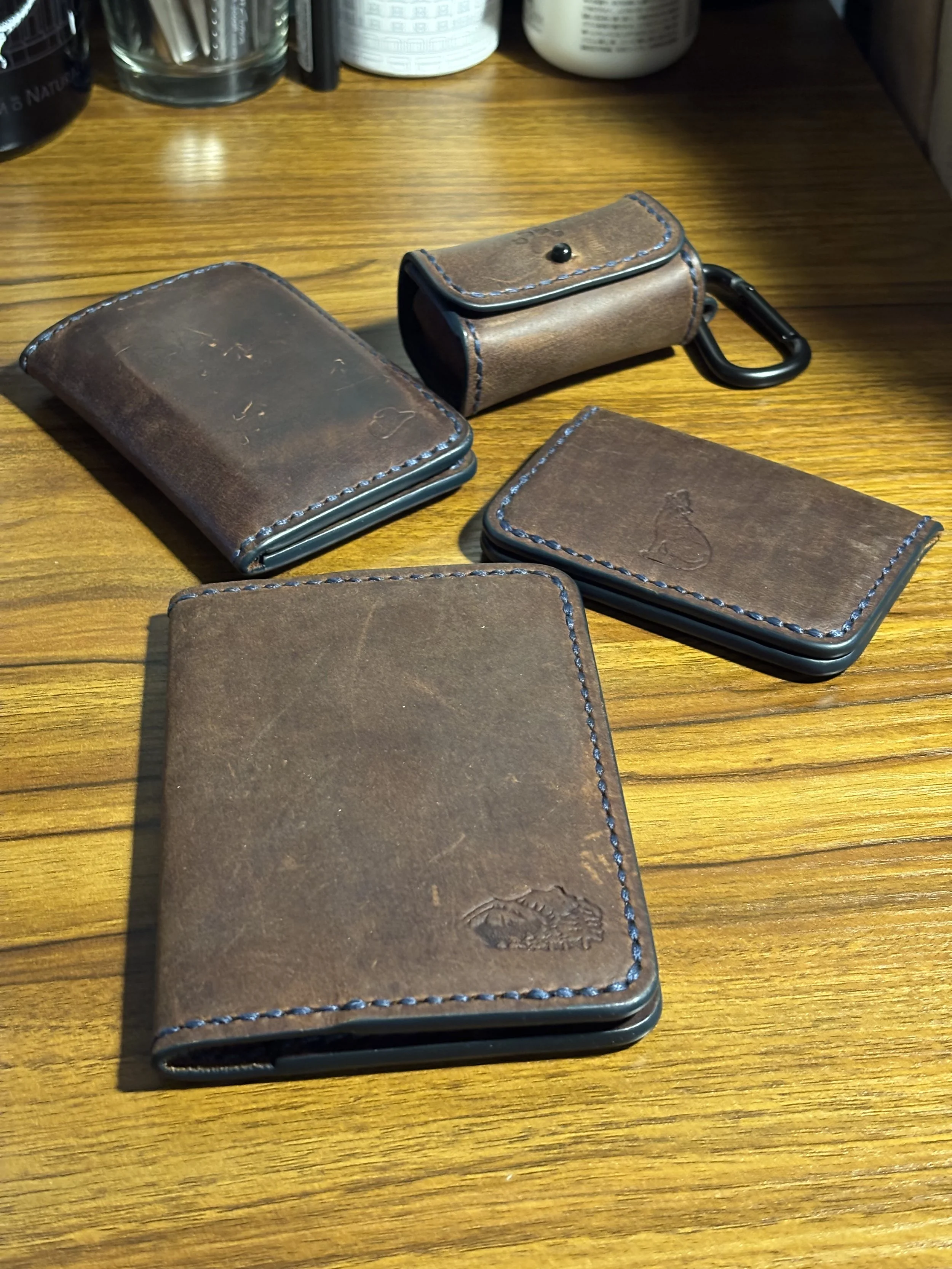
Cosmetic Wear vs. Structural Durability
There's an important difference between a leather good showing its age and one wearing out.
The surface of leather will change. Edge finishes will experience friction. A wallet carried every day won't look exactly the way it did when it left my workbench.
The construction underneath shouldn't depend on remaining pristine.
Every piece from The Wolf and The Dog Leather Co. is built entirely by hand. Where stitching is used, I rely on the traditional two-needle saddle stitch where appropriate, using durable thread.
With a saddle stitch, two needles on opposite ends of the same thread pass through each stitching hole from opposing sides. If the thread is damaged in one area, this construction helps keep the surrounding stitches intact and helps prevent the stitch line from unraveling.
What Happens to the Edges?
The edge finishes I currently offer are either sanded and burnished, or finished with multiple coats of edge paint, depending on the leather and the piece.
Those finishes aren't just there to make a new piece look good. They refine and protect the exposed layers of leather while creating a clean, comfortable surface.
Burnished Edges vs. Painted Edges
A burnished edge and a painted edge don't age in quite the same way.
On vegetable-tanned leathers that respond well to traditional edge finishing, I burnish the exposed leather itself. With use, a burnished edge may darken, soften, pick up scratches or lose some of its original polish, but it generally ages along with the leather around it. It can also be refinished if needed.
On leathers that don’t respond well to traditional burnishing, I use a multi-layer painted edge.
Any edge lives a hard life. It rubs against pockets and keeper straps, gets handled repeatedly, and encounters moisture, heat and dirt. Given enough use, it will show wear. A painted edge can be very durable, but it is still a finish applied over the leather. With enough repeated abrasion—especially at corners, folds and keeper straps—the coating may eventually wear.
Neither method is a shortcut. They're different ways of finishing, chosen according to the leather and the piece I'm building.
Leather Gets Better When It's Yours
One of the reasons I work with full-grain leather is the way it changes with use.
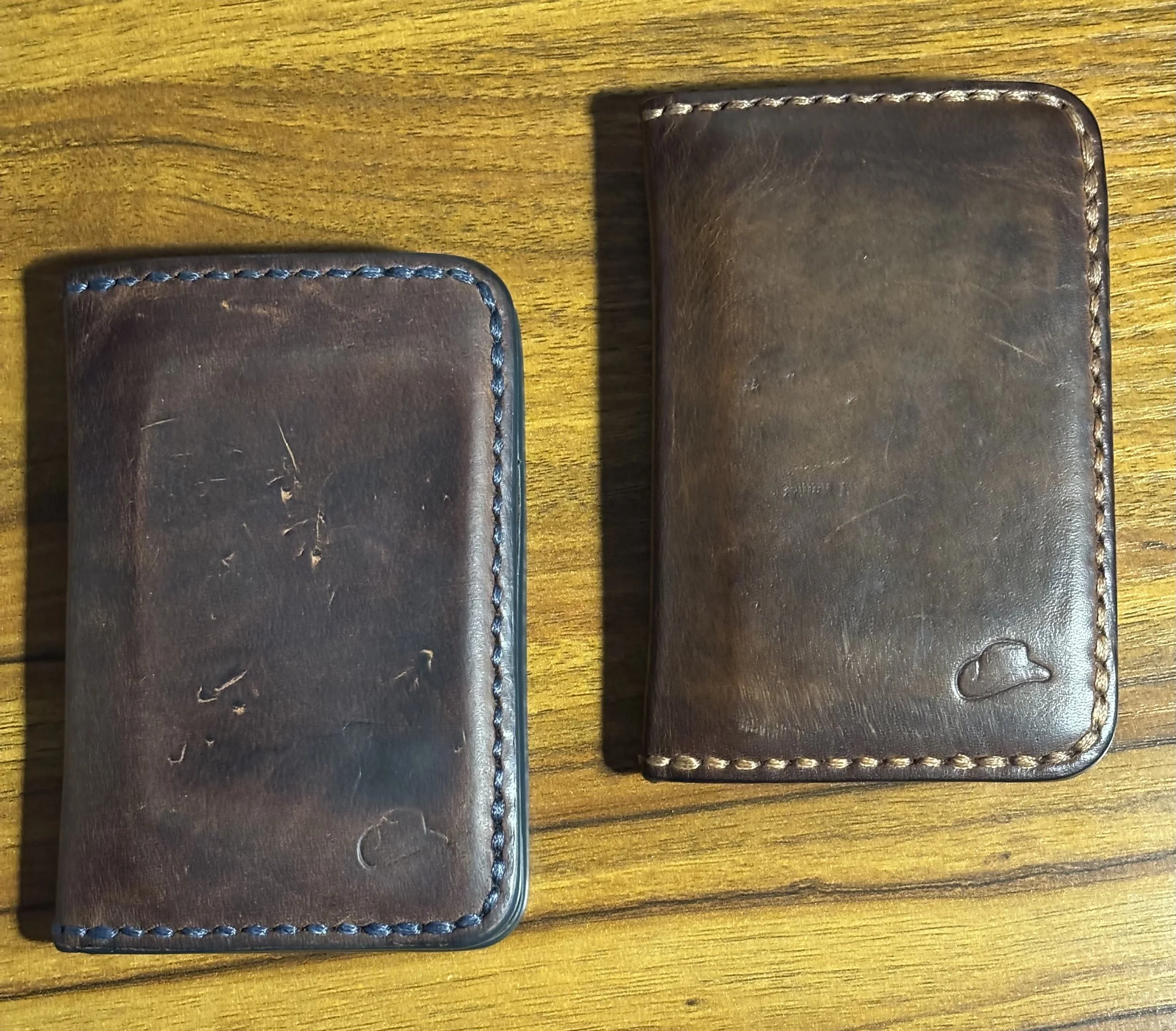
A scratch from your keys. A darker corner where your thumb always lands. The shape that develops from the way you carry it.
Every piece will age differently because every piece will be used differently.
I don't consider that deterioration. That's patina.
Over time, your piece from The Wolf and The Dog Leather Co. shouldn't look like something that has been carefully preserved in a drawer.
Over time, the leather tells the story of how it's lived.
Carry It
The Wolf and The Dog Leather Co. leather goods are made to be used.
I expect the leather and finishes to change with time, but I stand behind the construction.
The goal was never to make something that stays new.
The goal is to make something worth growing old with.